
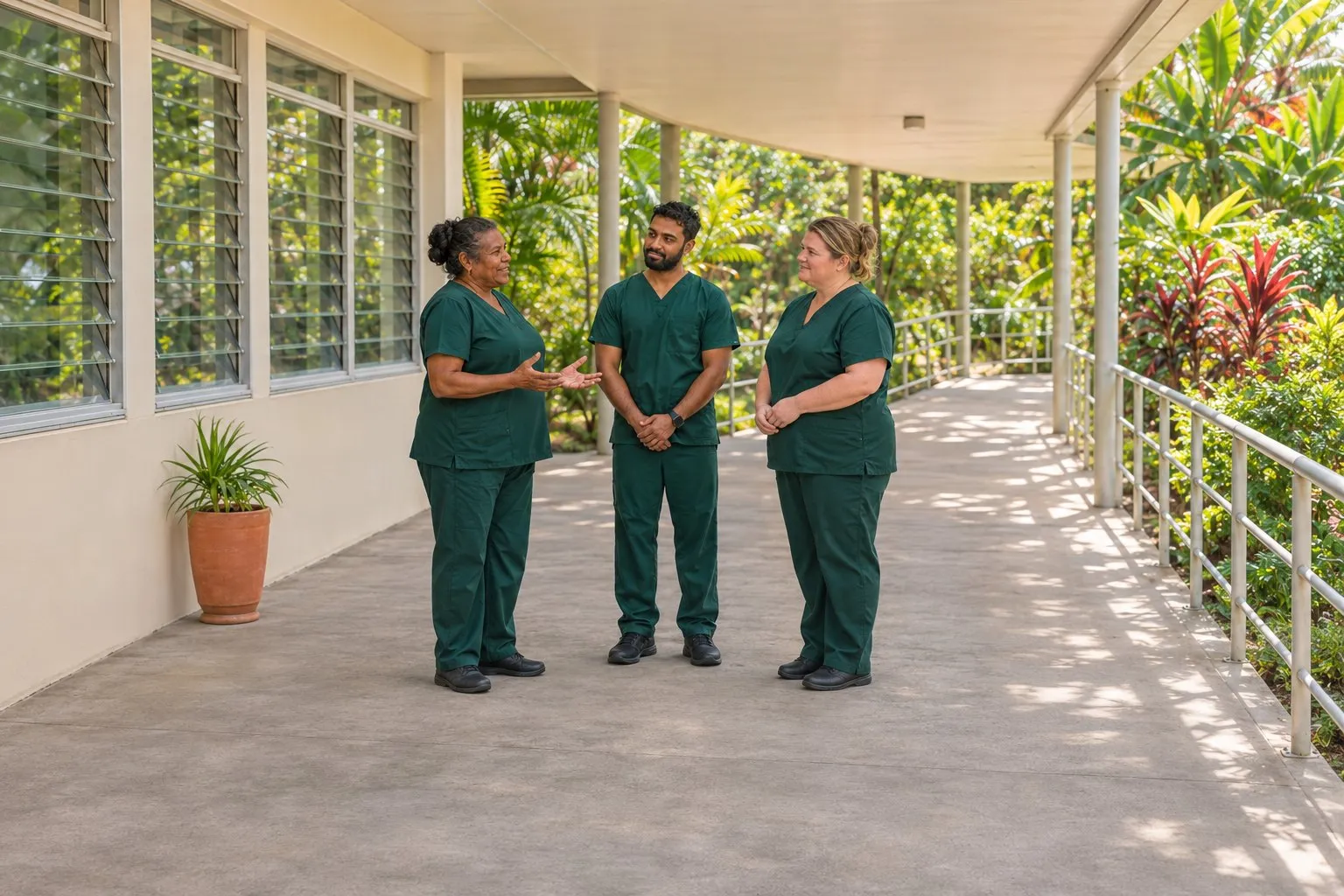
In a 2026 survey of 8,754 Queensland nurses and midwives, about 80% had experienced some form of workplace violence in the past year (ABC, August 2026). In a single 12-week period in 2025, Queensland Health recorded 5,282 incidents following altercations with patients, though it notes that not every incident is an assault (Question on Notice 948).
What Queensland doesn’t publish is the cost of that violence. So build the case from the scheme-wide claims trend, your hospital and health service’s own premium and incident data, and your seclusion rates, and be open about the gap.
What are the numbers in Queensland?
Mental injury claims across the Queensland scheme have doubled in four years, and each one costs about twice as much as a physical claim.
| Measure | 2021-22 | 2024-25 | 2025-26 |
|---|---|---|---|
| Accepted mental injury claims | 1,974 | 3,633 | 4,110 |
| Average mental injury claim (statutory) | n/a | $23,600 | $25,138 |
| Average physical injury claim (statutory) | n/a | ~$13,000 | $13,061 |
| Paid days a year, mental vs physical | n/a | 115.6 vs 49.5 | 123.0 vs 47.1 |
Sources: WorkCover Queensland Annual Report 2025-26 and 2024-25; the 2021-22 count via ABC, October 2026. WorkCover doesn’t split these by industry, so they aren’t health-only figures.
| Hospital and Health Service | 2024-25 | 2025-26 | Change | Per FTE |
|---|---|---|---|---|
| Cairns and Hinterland HHS | $13.2m | $13.6m | +3% | $2,025 |
| Gold Coast HHS | $15.7m | $16.3m | +4% | $1,432 |
| Mackay HHS | $6.2m | $5.8m | −6% | $1,848 |
| Metro North HHS | $31.6m | $33.2m | +5% | $1,559 |
| Metro South HHS | $26.6m | $26.2m | −2% | $1,449 |
| South West HHS | $1.5m | $1.2m | −20% | $1,238 |
| Sunshine Coast HHS | $15.1m | $15.0m | −1% | $1,829 |
| Townsville HHS | $10.7m | $10.1m | −6% | $1,523 |
Source: 2025-26 HHS annual reports. Listed alphabetically. Two figures are approximate, and some HHSs don’t disclose a comparable premium, because most HHS staff are employed by the Department of Health. Per FTE is our calculation. Every row, with its source, is on the open data page.
Source: Queensland Chief Psychiatrist Annual Reports 2025-26 (2021-22 onward) and 2024-25 (2020-21).
| Measure | 2020-21 | 2021-22 | 2022-23 | 2023-24 | 2024-25 | 2025-26 |
|---|---|---|---|---|---|---|
| Seclusion | 9.3 | 7.3 | 7.2 | 7.0 | 7.9 | 8.5 (preliminary) |
| Physical restraint | – | 11.3 | 10.8 | 9.0 | 9.9 | 10.3 (preliminary) |
Sources: Queensland Chief Psychiatrist Annual Report 2025-26 (2021-22 to 2025-26) and 2024-25 (2020-21 seclusion). 2025-26 figures are preliminary.
Services that have reduced restrictive practice report the results. Cairns and Hinterland HHS reports that its mental health unit’s program cut seclusion episodes by 78% and violence incidents by 63%, and that its behavioural response team reduced WorkCover claims (annual report 2025-26; self-reported). Mackay HHS reports statutory claims per 1,000 staff down 17% (annual report 2025-26).
What are Queensland regulators and the government saying?
The psychosocial code has applied since April 2023. Queensland’s Managing the Risk of Psychosocial Hazards at Work Code of Practice and its regulations commenced on 1 April 2023 (WorkSafe Queensland), and the code warns against relying mainly on administrative controls such as training on their own.
The government’s investment has gone to security. It added 212 security officers statewide, and Metro South alone has spent more than $37m on security (ABC, September 2026). The 2025-26 budget put $8.7m into hospital security, including more Security Ambassadors, a model the government describes as "a powerful de-escalation strategy" (ministerial statement, July 2025). The nurses’ union says the 2026-27 budget had no new money for occupational violence prevention (Health Services Daily).
The 2016 taskforce still frames the system’s approach. Queensland Health’s Occupational Violence Prevention Taskforce made 20 recommendations in 2016, and a dedicated unit was set up to deliver them (Clinical Excellence Queensland).
Which arguments land in Queensland?
In Queensland, lead with workforce and psychological injury, then show how training complements the security investment.
- Psychological injury and lost time. Mental injury claims have doubled across the scheme and keep people off more than twice as long as physical injuries. Every one is a nurse your HHS has to backfill.
- Security plus skills. The state has funded security officers and ambassadors. Training clinical and security staff together in the same de-escalation approach gets more from that investment.
- Restrictive practice. Seclusion has risen two years running, to 8.5 per 1,000 bed days in 2025-26 (preliminary), and physical restraint rose too. Cairns and Hinterland’s results show what a sustained prevention program can do in a Queensland unit.
- Compliance. The psychosocial code has applied since 2023 and warns against relying on administrative controls alone, so present training as part of a system of controls.
- Avoided cost. Use your HHS’s premium and your own claims data. A common-law claim across the scheme averaged more than $200,000 in 2025-26 (WorkCover Queensland).
Where can the money come from in Queensland?
Queensland has no current nurse-led innovation fund, so the main routes are HHS budgets and individual nurses’ professional development allowances.
| Source | What it can pay for | Amount | Who applies |
|---|---|---|---|
| HHS OV, security, education and WHS budgets | Programs for wards or EDs, including joint training with security | Internal | Directors of nursing, safety and mental health |
| Nurse professional development allowance | Any continuing professional development, including a place on a course | About $1,740 to $2,900 a year, depending on the facility | Public-sector nurses at Grade 3 and above, paid in March and September |
| HHS research grants and foundations | An evaluated pilot | Varies | Staff of that HHS, e.g. Metro North research grants |
| Nurses and Midwives EB10 Innovation Fund | Nurse-led models of care | $10m across 19 projects | Closed (2021), but a precedent worth citing if a new fund opens |
Pooling professional development allowances across a team can cover a group’s places. See Part 3 for national scholarships, research and philanthropy.
Where do I find my own figures?
Ask early: most of what you need sits inside your HHS.
- WorkCover: your HHS’s premium in its annual report, and claims data from your HR or WHS team.
- Incidents: RiskMan reports for occupational violence, Code Blacks and Code Greys, by unit.
- Seclusion and restraint: your service’s rates from the Chief Psychiatrist’s reporting.
- Workforce: sick leave, vacancies and agency use for your unit.
Frequently asked questions
How common is violence against nurses in Queensland?
In a 2026 Queensland Nurses and Midwives' Union survey of 8,754 members, about 80% said they had experienced some form of workplace violence in the past year.
What do mental injury claims cost in Queensland?
Across the WorkCover Queensland scheme in 2025-26, a mental injury claim averaged $25,138 in statutory costs, almost twice a physical claim, and paid 123 days a year against 47 for a physical injury. Accepted mental injury claims rose from 1,974 in 2021-22 to 4,110 in 2025-26.
Does the psychosocial code apply to Queensland hospitals?
Yes. Queensland's Managing the Risk of Psychosocial Hazards at Work Code of Practice and the matching regulations commenced on 1 April 2023, and apply to hospital and health services as employers.
Sources
- WorkCover Queensland Annual Report 2025-26
- WorkCover Queensland Annual Report 2024-25
- ABC News, QNMU workplace violence survey (August 2026)
- Queensland Parliament, Question on Notice 948 (2025)
- Queensland Government ministerial statement on hospital security (July 2025)
- Queensland Chief Psychiatrist Annual Report 2025-26
- Queensland Chief Psychiatrist Annual Report 2024-25
- WorkSafe Queensland, psychosocial hazards Code of Practice 2022
- Clinical Excellence Queensland, preventing occupational violence in Queensland’s public hospitals
- Hospital and Health Service annual reports 2025-26 (linked row by row on the open data page)