Xantha
Hospitals · Mental health · Emergency · Aged care

De-escalation training for health services.

Simulation-based de-escalation training with professional actors, for the teams who meet distress and aggression every shift — taught the way it has to be used: under pressure, with a real person in front of you.

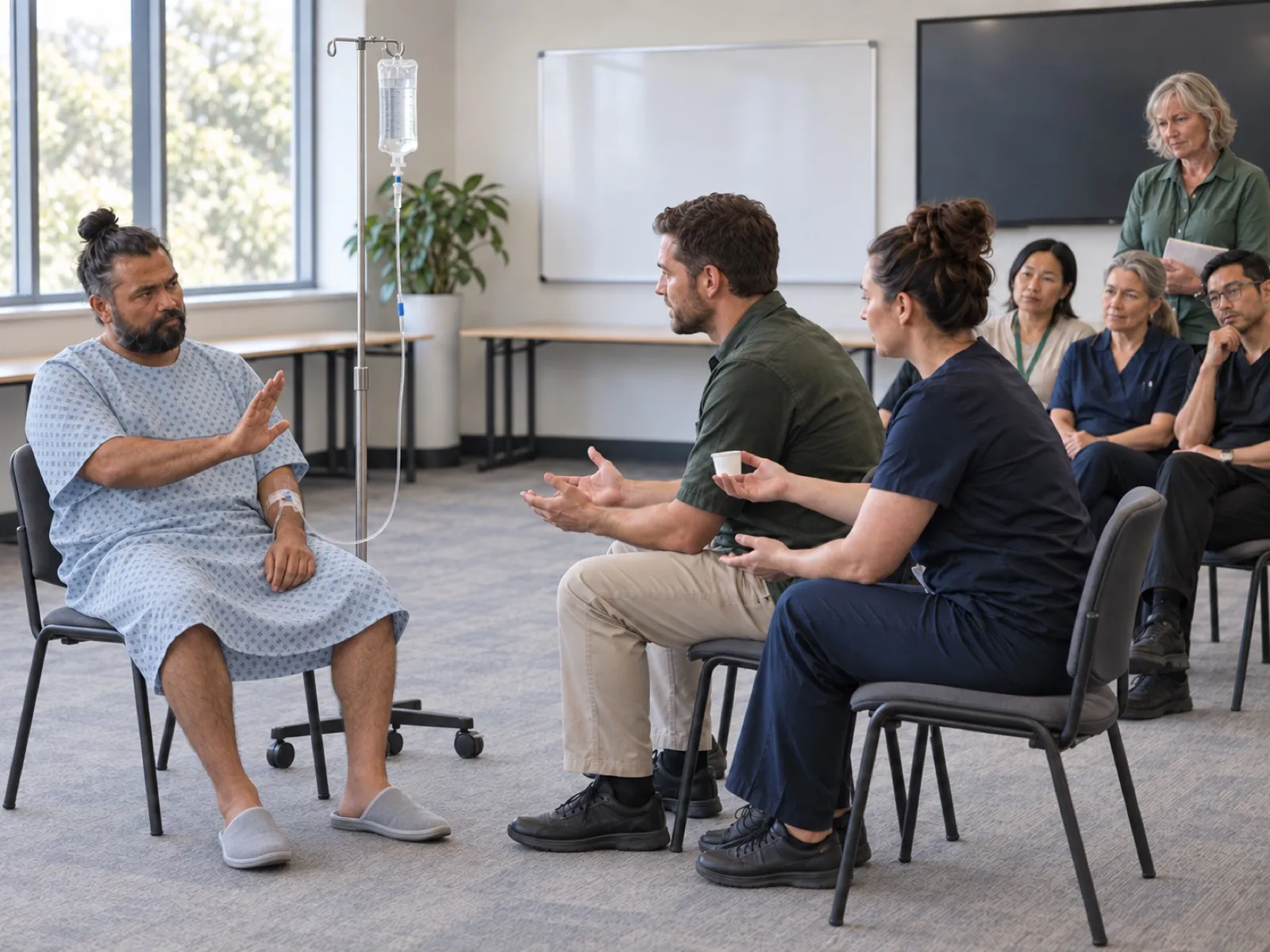
Staff practising de-escalation with a simulated patient played by a professional actor

Xantha delivers de-escalation training for Australian hospitals, mental health units, emergency departments and aged care. Staff practise with professional actors playing patients and families, in scenarios drawn from the service's own incidents, then review each encounter through the patient's eyes. Training runs on site, anywhere in Australia.

3,000+ health staff trained 12+ health networks Since 2015 in Australian health services
By setting

Which de-escalation training fits your setting?

The skill is the same everywhere. The pressure is not. Each program is built for the setting it is used in.

Mental health inpatient units

Conflict and containment: seclusion, restraint and the flashpoints that lead to them.

Safewards

The evidence-based model for reducing conflict and containment, taught through a champion program and a one-day simulation workshop.

Safewards training →

Emergency departments

Distress, long waits, intoxication and mental health presentations in a space built for speed.

Safewards for EDs · Security + Clinical

Safewards adapted for the ED, or a joint day where ED clinicians and security officers train as one team.

Safewards in emergency departments →

General and private hospital wards

The anxious admission, the family at the desk, the patient who has waited four hours.

Care Under Pressure

A one-day simulation with a newly admitted patient and, in the advanced version, their family. Any ward, any discipline.

De-escalation for general wards →

Hospital security officers

Clinicians trained to de-escalate, security trained to contain, and no shared playbook when it escalates.

Security + Clinical

Security officers and clinicians in the same simulation, with a shared language for early warning signs and who does what in a Code Black.

Joint security and clinical training →

Aged care and dementia units

Distress that comes from changing brain function, not intent, and that too easily ends in a restrictive practice.

Dementia-Informed Care

Teepa Snow's Positive Approach to Care®, delivered by a PAC-certified trainer and taught through simulation.

Dementia-informed de-escalation →
How it works

Why simulation works for de-escalation training.

In a high-pressure moment people don't rise to what they were told in a training room. They fall back on what they have practised. So every Xantha program is built on the same loop, and most of the day is spent doing it.

  1. 01
    Experience

    Participants start on the other side: as patients, in an immersive role-reversal, so they feel what drives distress before they learn to respond to it.

  2. 02
    Observe

    Professional actors play the escalation, then a better way through it, so the skill is concrete before anyone is asked to try it.

  3. 03
    Simulate

    Each participant runs the scene with a simulated patient who reacts the way a real one would. Scenarios come from the service's own incident reports.

  4. 04
    Debrief

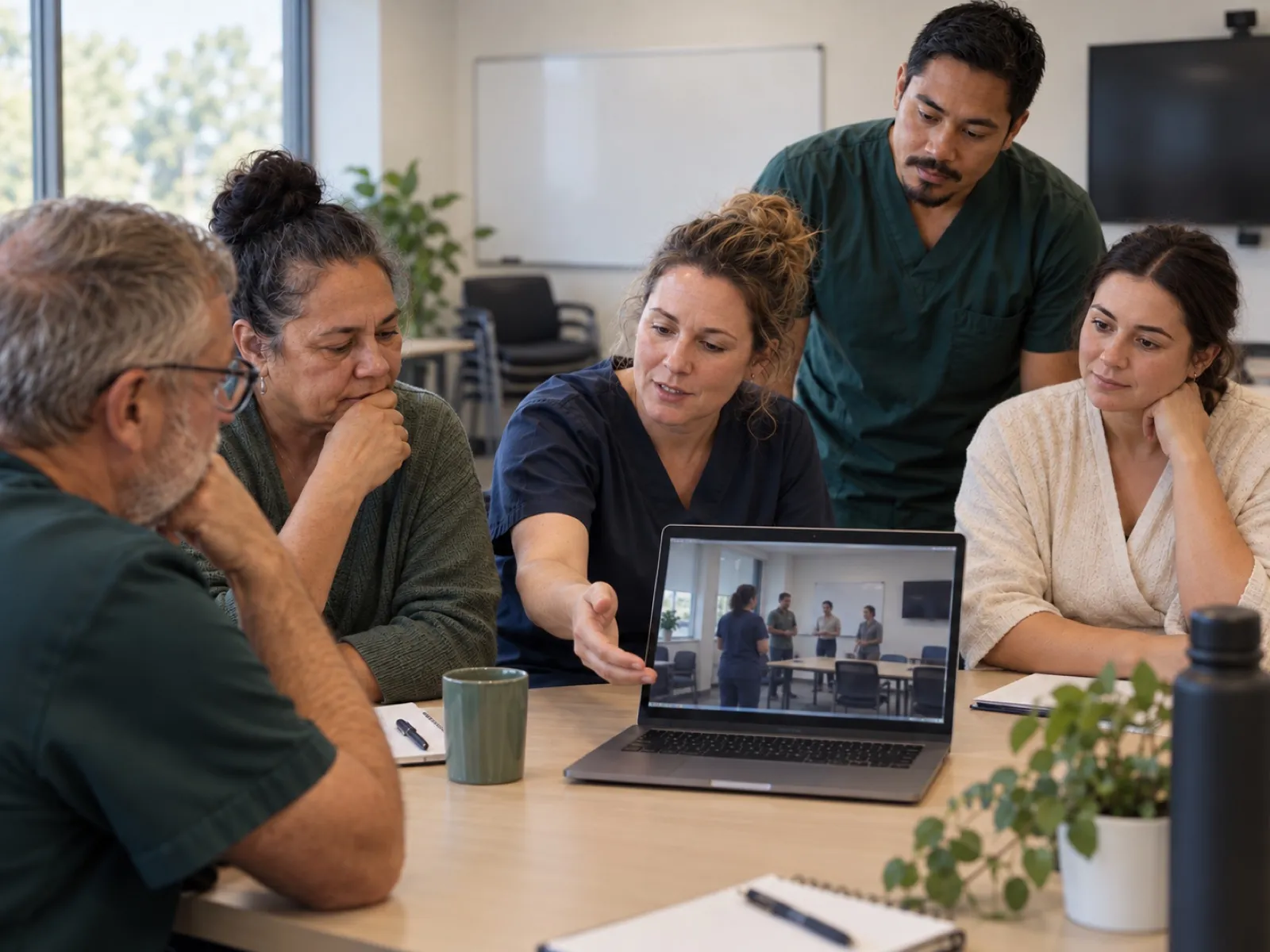
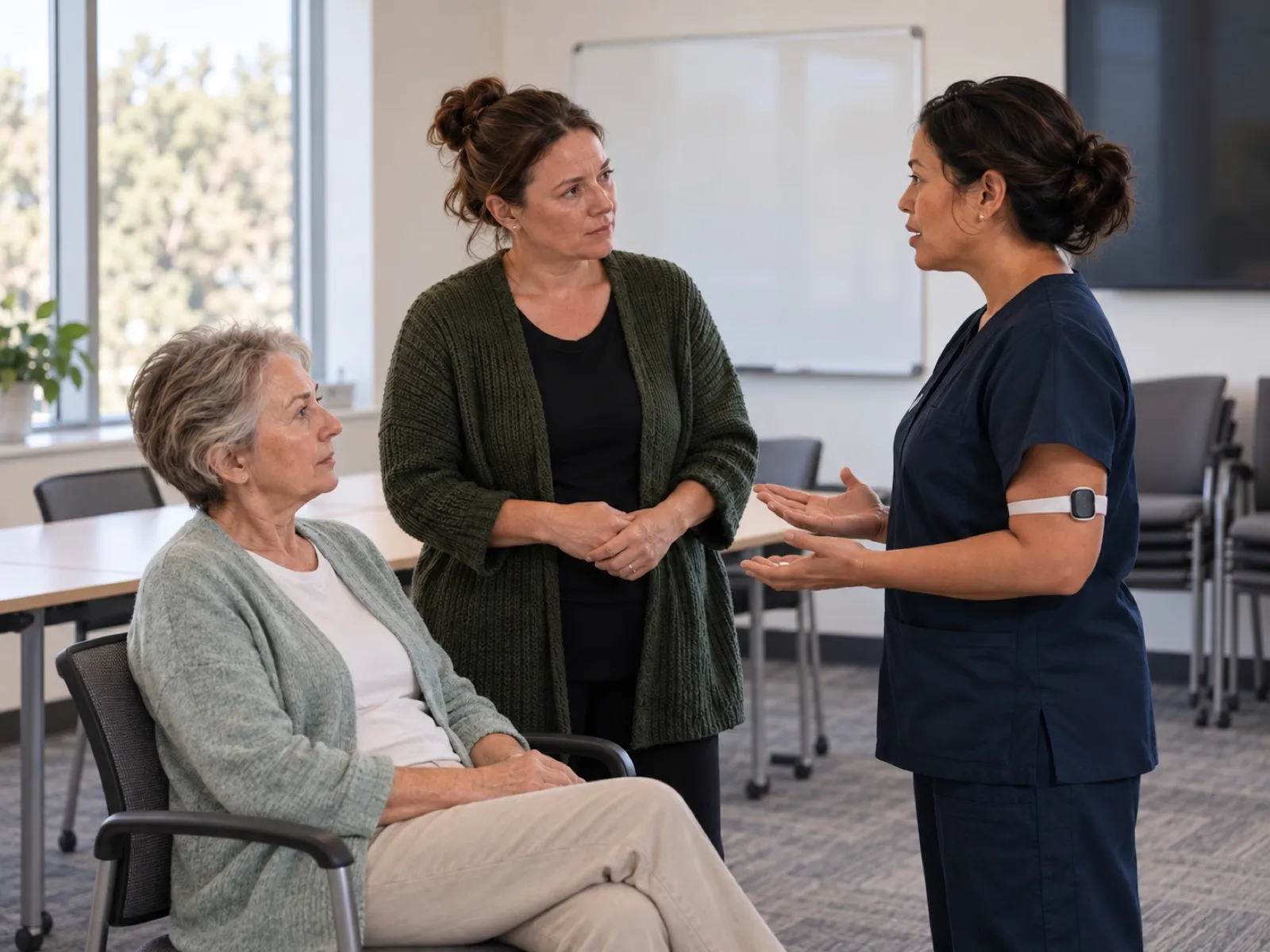
    The simulated patient wears smart glasses, so the debrief shows the participant's tone, distance, hands and words exactly as the patient saw them. An optional biometric armband shows the heart-rate spike before the sharp reply.

  5. 05
    Repeat

    Then they run it again. Improvement is something you can see in the second attempt, not something left to confidence.

A debrief group reviewing a smart-glasses recording of a simulation
What staff practise

What does de-escalation training teach?

Every program is tailored, but these are the skills staff leave with — practised, not just discussed.

Recognising early signs of distress and agitation, before an incident
Calm, respectful communication when someone is angry, frightened or confused
Managing your own stress response under pressure
De-escalating with a patient and a family member at the same time
Working as one team with security when a situation escalates
Debriefing and supporting colleagues after an incident
Actors playing a patient and her daughter, with a clinician wearing a biometric armband
For safety leads

For WHS, OVA and restrictive practice leads.

Occupational violence and aggression
A practical intervention you can point to.

Work-related violence claims are a growing cost in every state. De-escalation training with scenarios drawn from your own incident data gives you a documented, practical control, an attendance record for every participant, and measures you can track against your incidents.

Making the case for violence prevention training →
Western Australia
The new Restrictive Practices Standard.

From 9 October 2026, WA hospital-based mental health services must run a de-escalation training program with specified content, refreshed yearly, with contracted security trained to the same standard. Our free plain-English guide and self-check walk through what it asks.

Read the guide and self-check →
In Australian health services

Recent work.

Common questions

De-escalation training: common questions.

What is de-escalation training?

De-escalation training teaches staff to recognise the early signs that someone is becoming distressed or agitated, and to respond in ways that calm the situation rather than inflame it. In health services it sits at the centre of preventing occupational violence and aggression, and of reducing seclusion, restraint and other restrictive practices.

Why simulation instead of e-learning or a lecture?

Knowing what to say is not the same as being able to say it when someone is shouting at you. Simulation lets staff practise with a person who reacts like a real patient, see how they came across, and try again. Xantha uses professional actors as simulated patients, and brings consumer advocates and people with lived experience into the simulations.

How long does the training take?

Most formats are a single day on site. The Safewards Champion Program adds an online masterclass of one to two hours beforehand, and there are half-day options for whole-team awareness. Every program is scoped to your rosters.

Who should attend?

Anyone who deals with patients, residents or families: nurses, doctors, allied health, ward clerks, security officers and support staff. Mixed groups work best, because de-escalation depends on the whole team responding the same way.

Do you train hospital security officers?

Yes. The Security + Clinical program puts security officers, including contracted security, in the same simulation as clinical staff, so both groups learn one approach to early warning signs and escalation.

Is the training accredited, and does it carry CPD?

The Safewards Champion Program includes a certificate of completion and around 11 hours of CPD. Mental Health First Aid courses are accredited and delivered by Lisa Spong, an accredited Mental Health First Aid® Instructor. Ask us about CPD for other formats.

What does WA's new Restrictive Practices Standard require?

From 9 October 2026, hospital-based mental health services in WA must run a de-escalation training program with specified content, completed by new staff and refreshed yearly, with contracted security trained to the same standard. Our free guide and 16-point self-check walk through it. Whether your program meets the Standard is your service's assessment to make.

Where do you deliver, and what does it cost?

On site, anywhere in Australia. Xantha is based in Perth and works with health services across Australia. Every program is scoped and quoted for your service; travel is quoted separately.

Last reviewed

Tell us your setting and what a bad day looks like there.

A 20-minute call with Lisa or William. We will suggest where to start and what a first day would cover.