
Check
Safewards Pulse Check
A practical, on-site check of whether Safewards is sustaining in your organisation: fidelity checks on the ward, then clear next steps for your executive sponsor.
A1.4 · A1.5 How pulse checks work →
The Standard now spells out the de-escalation training every hospital-based mental health service in WA must provide. A plain-English guide and a free self-check, no sign-up.
Read the official Standard ↗From 9 October 2026, every hospital-based mental health service in WA must run a de-escalation training program with specified content, completed by all new staff and refreshed yearly, with contracted security trained to the same standard as internal security.
Prevention and early identification of distress, aggression management, communication and verbal de-escalation, scenario-based practice, lived experience perspectives and competency assessment. The Standard says the focus should not be on how to use restraints.
A3.1 · N3.1All new staff complete the training program, and staff complete a yearly refresher.
A3.1a–b · N3.1a–bContracted security staff must meet the same training requirement as internal security staff.
A3.1c · N3.1cNon-authorised settings, including emergency departments, general wards and Mental Health Observation Areas, have their own set of standards, with the same training requirements.
N1–N6Authorised hospitals and units, public and private, where restraint and seclusion are governed by the Mental Health Act 2014 (s.211–240).
On top of the training requirements, the A standards add the Six Core Strategies, a ward-based reduction program such as Safewards, an executive sponsor, and a yearly report to the Office of the Chief Psychiatrist.
Emergency departments, general wards, non-authorised inpatient units and Mental Health Observation Areas.
Seclusion can't be used in these settings, and restraint is largely governed by common law. Clinical and security staff also need training in that legal framework (N2.3).
Tick what's already in place, then build your action plan: every gap, with a suggested first step. Nothing is saved or sent.
Clause references: A = authorised services, N = non-authorised settings. Nothing you enter is saved or sent.
Each gap from your self-check, with a suggested first step. Add an owner and a date, then print it or copy it into an email for your executive sponsor. If you change your ticks, the plan updates.
Gaps you'd like a hand with? See how we help →
Everything on the list is in place. Keep the evidence for each item ready for your yearly report.
We've rolled out Safewards and simulation training across Australian health services since 2015. We train your staff and your trainers, so your education team is up to speed quickly.
A practical, on-site check of whether Safewards is sustaining in your organisation: fidelity checks on the ward, then clear next steps for your executive sponsor.
A1.4 · A1.5 How pulse checks work →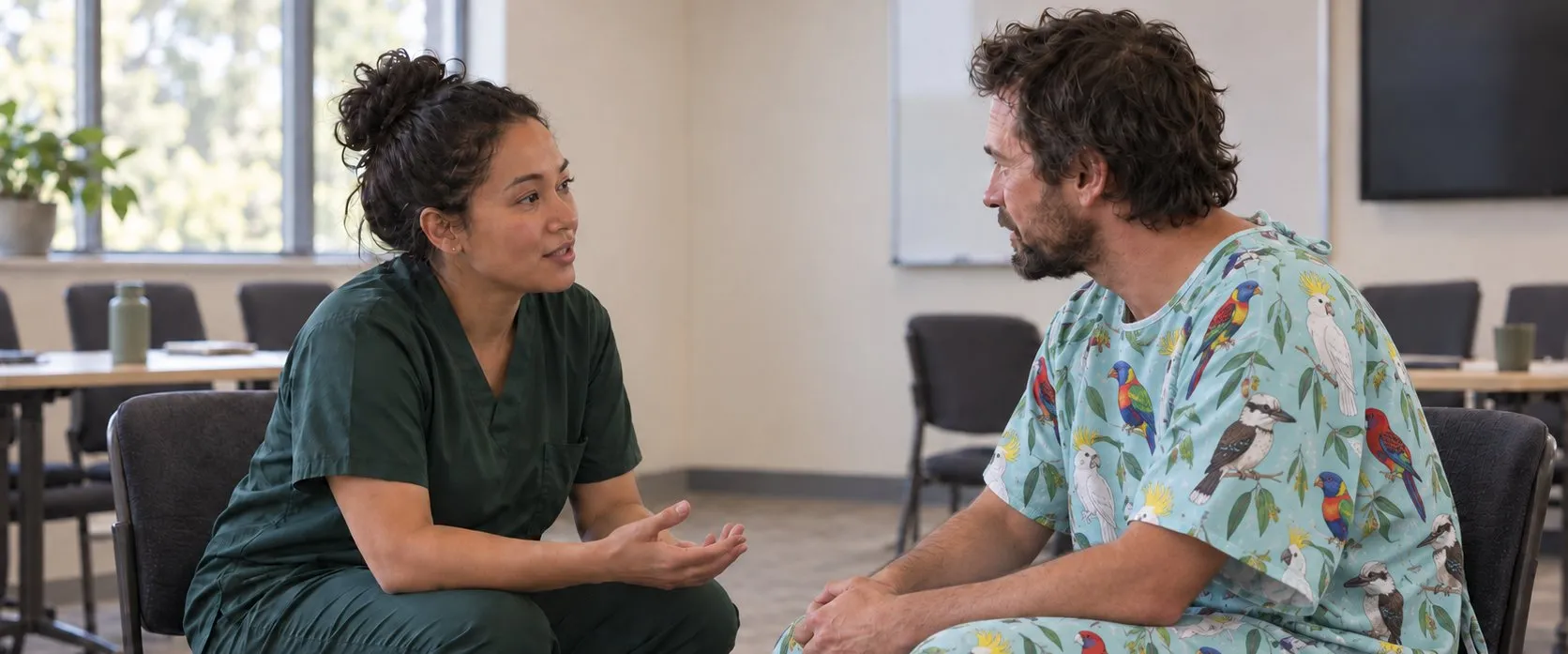
The scenario-based de-escalation training the Standard asks for: actor-led simulations with observed practice and feedback, plus an online masterclass. We bring consumer advocates and people with lived experience into the simulations. Run it as train-the-trainer and your own team delivers the yearly refresher.
A3.1 · N3.1 See the Safewards training →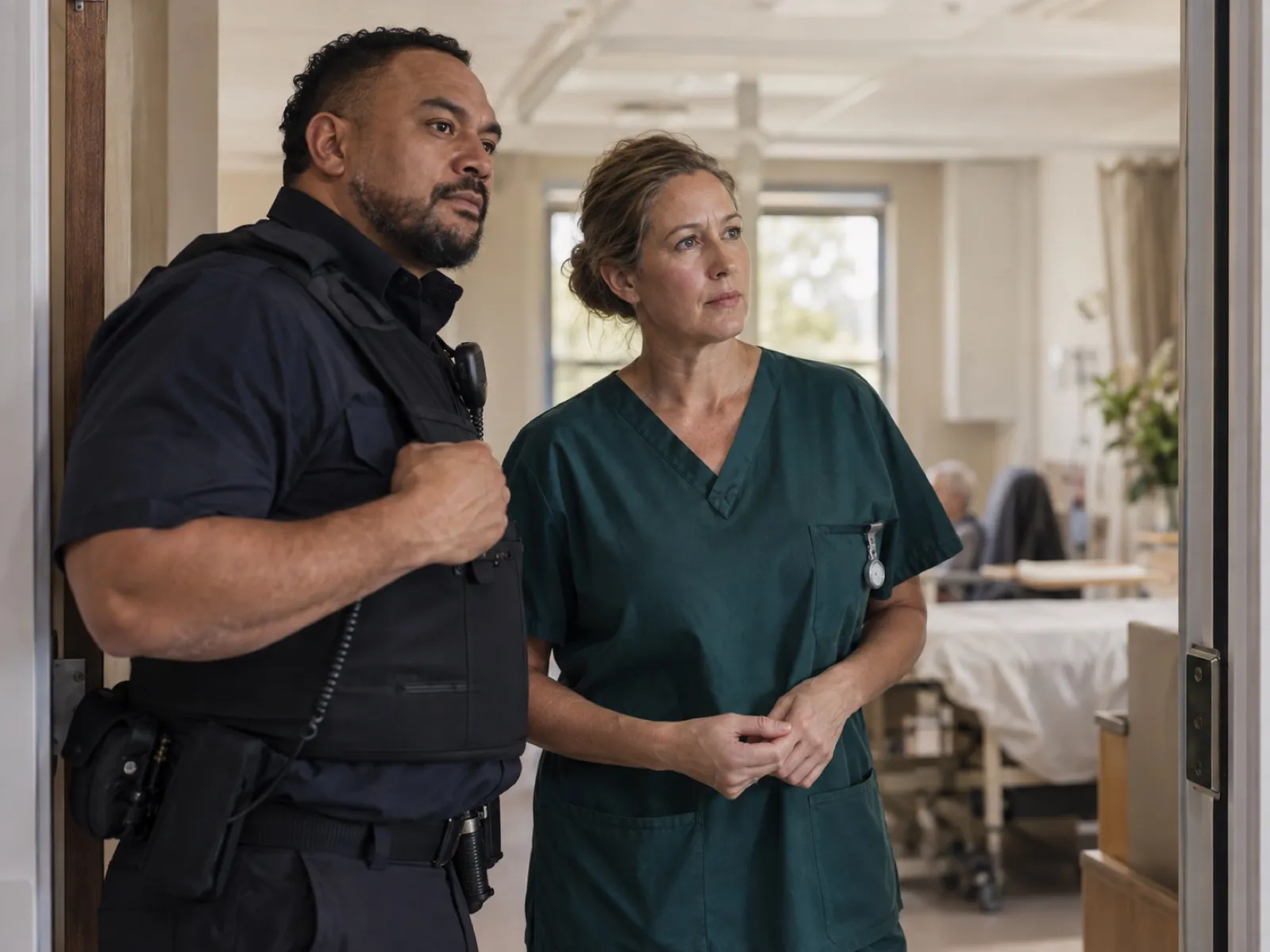
Clinicians and contracted security staff train in the same room, so both meet the same requirement and respond as one team when a situation escalates.
A3.1c · N3.1c See the joint program →“As someone with lived experience, it gave me a chance to see the change that is trying to be made in the delivery of services. I was also made to feel like what I have been through hasn't been for nothing.”
In 2025/26 we trained Safewards champions at WA Country Health Service and Central Adelaide LHN, including ED, Aboriginal mental health and security staff.
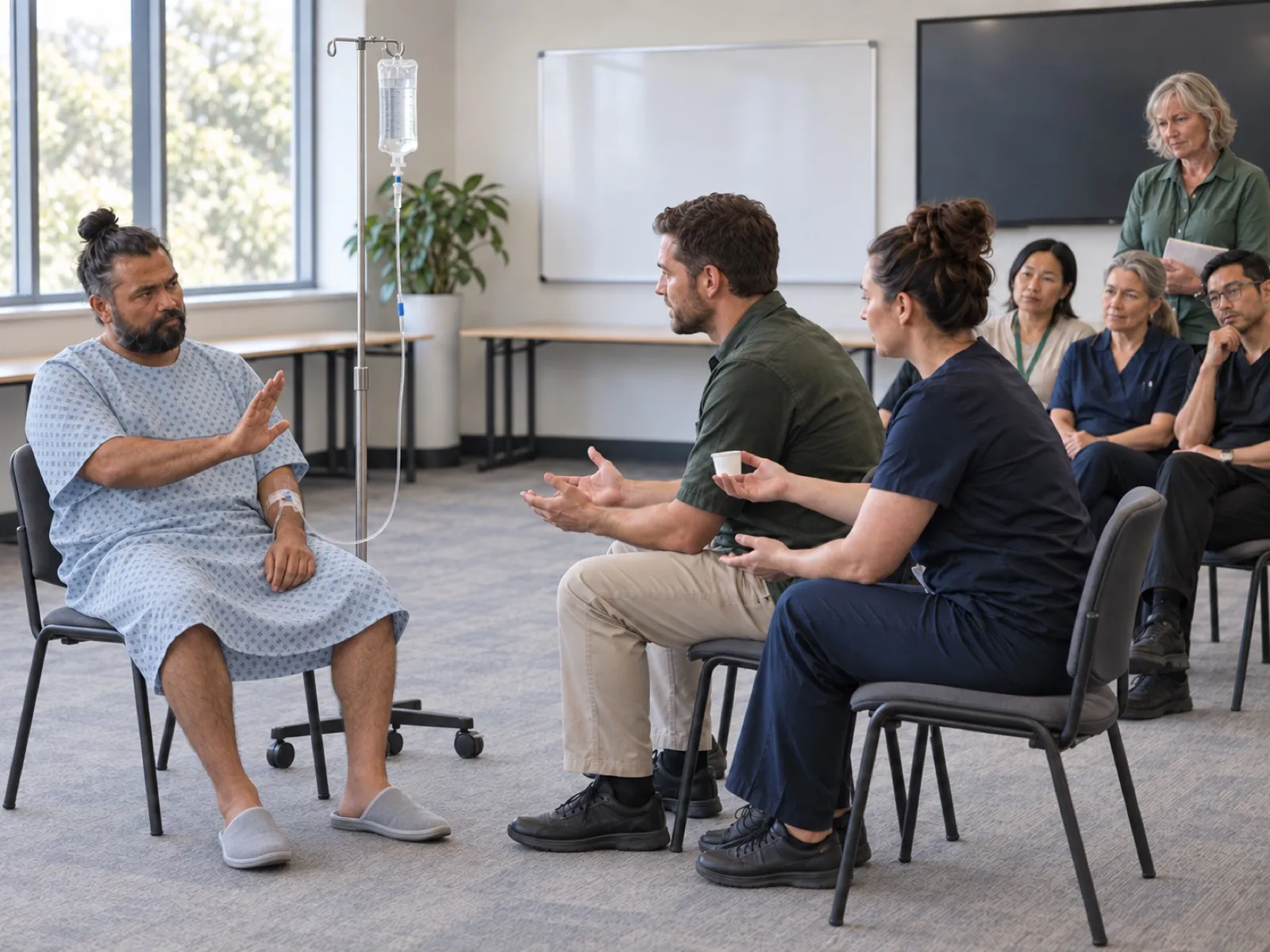
Geraldton Health Campus leadership set Safewards as the standard model of care for its new acute psychiatric unit before it opened, and trained more than 35 champions across five roles so the model was part of the unit's culture from the first shift. Delivered 2025/26. Geraldton is the third WACHS campus to deploy Safewards across its mental health services.
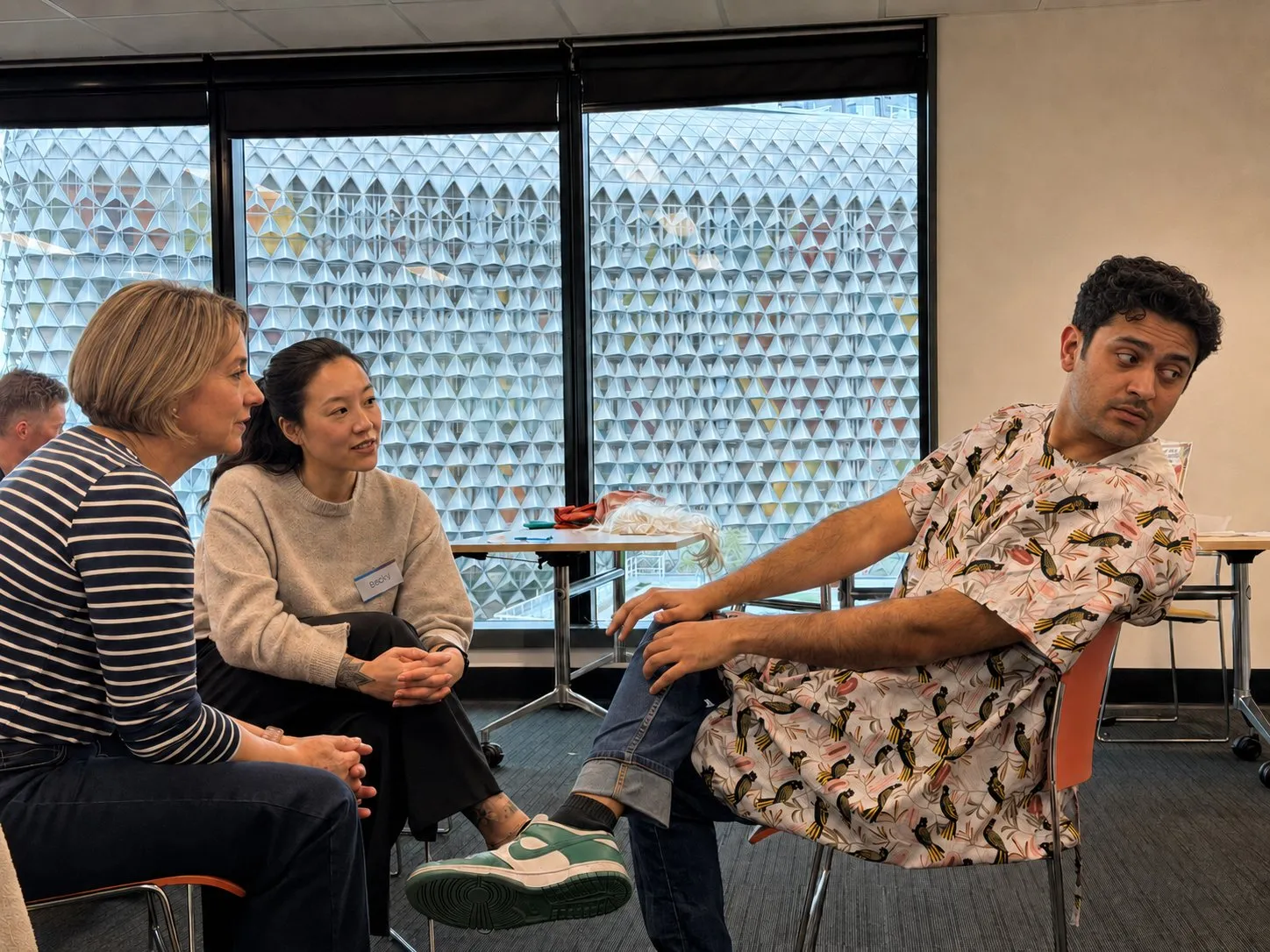
Royal Adelaide and The Queen Elizabeth hospitals trained emergency department nurses, consultants, educators and nurse practitioners alongside contracted security staff, building a shared approach to early warning signs and de-escalation across both sites. Delivered 2025/26. The Safewards Champion Program then kickstarted a wider education program for more than 800 staff.
Yes. It applies to hospital-based mental health services in WA, public and private. Authorised hospitals and units follow standards A1–A6; non-authorised settings such as emergency departments and general wards follow N1–N6.
It took effect on 9 October 2026. It replaces the Chief Psychiatrist's 2015 Standard for Clinical Care: Seclusion and Bodily Restraint Reduction.
No. The Standard sets what the training must cover and who must complete it, not who delivers it. Many services will meet it with their own education teams.
Authorised mental health services must implement a ward-based strategy or program for reducing restraint and seclusion. Safewards is the example the Standard names (A1.4).
A program covering prevention and early identification of distress, aggression management, communication and verbal de-escalation, scenario-based de-escalation, lived experience perspectives and competency assessment, in age-appropriate versions (A3.1, N3.1). All new staff complete it, all staff do a yearly refresher, and contracted security must meet the same requirement as internal security.
No. It is Xantha's independent plain-English summary. Xantha is not affiliated with the Office of the Chief Psychiatrist. Always refer to the official Standard.
If you're working out how your program measures up, we're happy to compare notes.
Summary based on the Chief Psychiatrist's Standard for Restrictive Practices (Restraint and Seclusion) for Hospital-based Mental Health Services (version 2.0, issued under s.547, Mental Health Act 2014 (WA), effective 9 October 2026). Xantha is independent of the Office of the Chief Psychiatrist, and this page is not official guidance. Always refer to the official Standard. xantha.com.au/wa-restrictive-practices-standard