
Care where people are
From shearing sheds to a mental health intensive care unit — what needs to change so people can receive care, and nurses can do the work they are trained to do?
By William Coleman, Xantha
“When healthcare is accessible, people turn up.” — Carol Mudford
Carol Mudford brought a shearing shed into the final day of ACMHN 2026 in Adelaide. A registered nurse who has worked in mental health and as a shearer, she described what happens when someone knows a community well enough to recognise where services are missing it, and starts doing something about it.
Her keynote gave the day a practical starting point. Across the sessions Lisa and I attended, the question kept returning: what needs to change so people can receive care, and nurses can do the work they are trained to do?
A nurse with a foot in both worlds
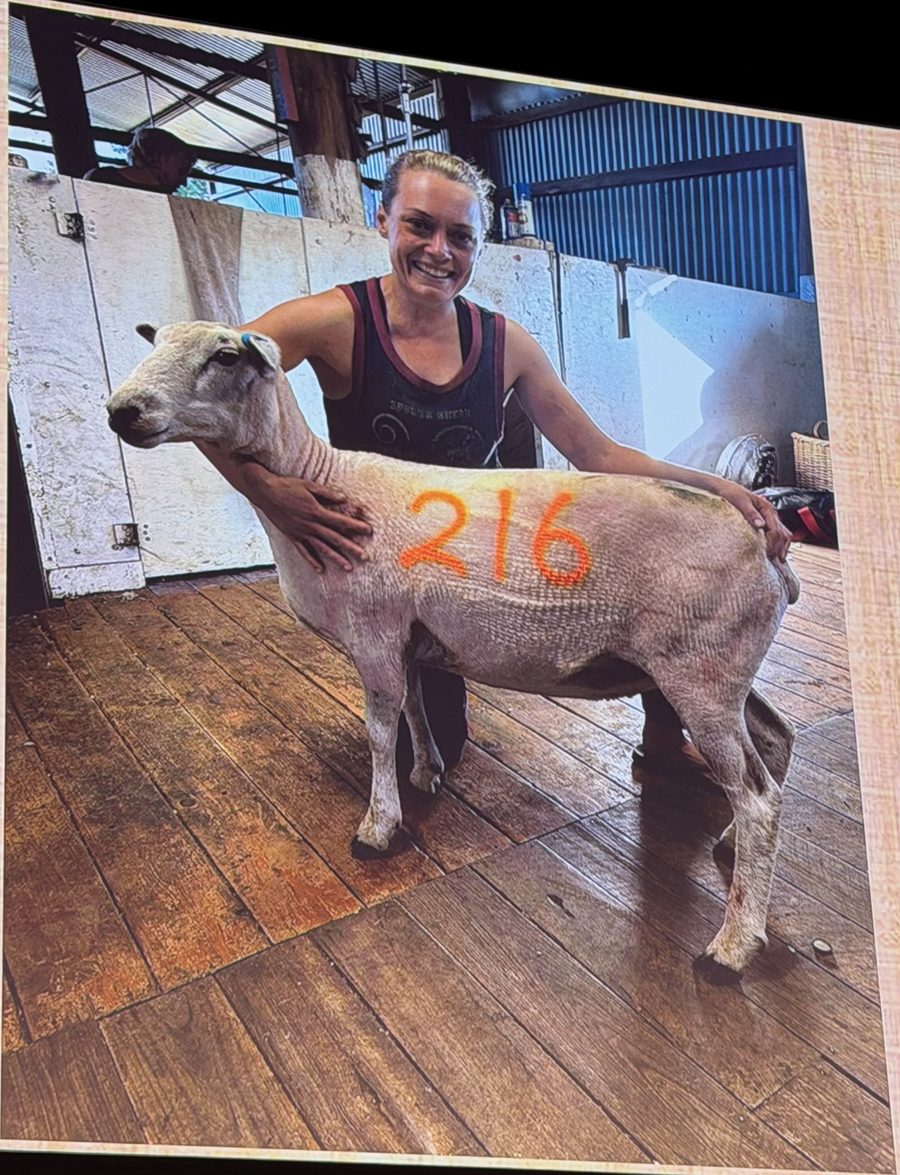
Carol founded Shedway after three shearers died by suicide within weeks of her starting a mental health nursing role in 2023. One was someone she had worked alongside. Her connection to the sheds gave her both a reason to act and a way to begin.
Shedway’s volunteer champions belong to the shearing community. They compete, judge, work and talk with people at agricultural shows and industry events. Conversations happen around the day, including in the barbecue queue. Resources can be picked up quietly by someone who would rather avoid a conversation at a staffed table.
Carol described adapting her approach when longer training workshops were difficult for teams to attend. Shorter toolbox talks could fit around shearing schools and working sheds. The learning began with understanding the people, their work and the time they could realistically give.
Her account of arranging Q fever testing and vaccination at two agricultural shows made the access issue tangible. The shows were a week apart, fitting the clinic’s two-visit process into events people were already attending. Staff stayed to accommodate competitors finishing their events. “When healthcare is accessible, people turn up,” she said.
Carol’s request to the room was specific. Shedway needs partnerships, help training and supporting its champions, and advice on governance as it explores developing peer support. She was clear that its work to date has focused on connecting people with existing services, rather than providing clinical care or counselling. There is a useful invitation here for mental health nurses to contribute expertise alongside a community that already knows its people.
Changing the conditions around seclusion
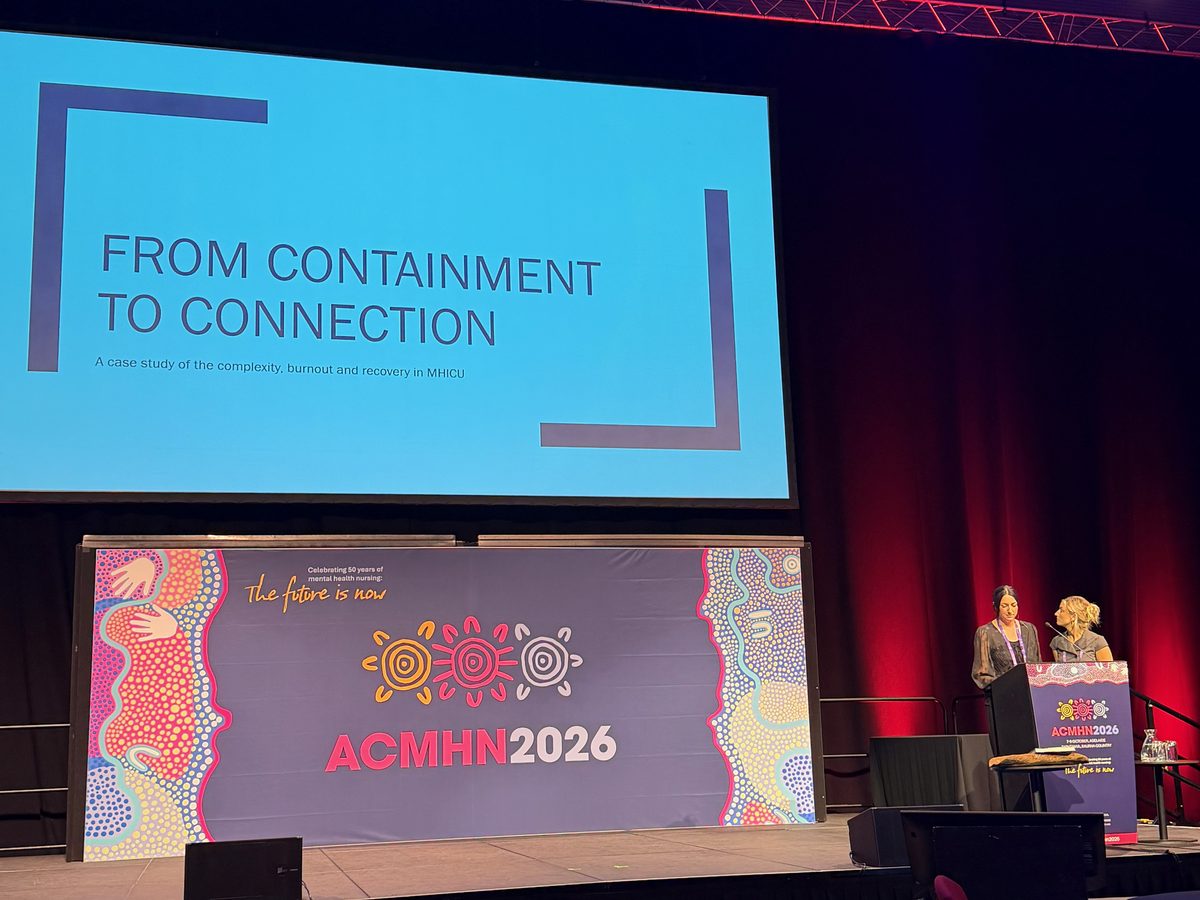
The NSW presentations after lunch were particularly good. Hannah Fisher and Isabella Primmer described the difficult work of moving beyond prolonged seclusion in a mental health intensive care unit.
Their case presentation showed a team stepping back after repeated plans had failed. They created a designated area within the unit, with access to a bathroom and television, to provide greater consistency, predictability and room for everyday activity while working towards recovery.
They also spoke openly about the cost to staff: exhaustion, compassion fatigue and self-doubt. Listening circles, clinical supervision and opportunities for respite were part of supporting the team. Seeing the person move freely and carry out ordinary activities gave staff a different view of what might be possible.
The presenters described greater stability and supported leave, with a pathway towards supported living still being developed. This was an individual case. It deserves attention without turning it into a claim that one approach will work everywhere. I asked how the learning was spreading. Isabella said they had used the approach with another consumer, while wider adoption remained uncertain. That is a worthwhile next question for services: how do we share promising practice while examining what makes it safe and appropriate in each setting?
Making debriefing part of the work
Emily Newton, Shaun Robinson and Daniel King’s “Incident to Insight” presentation followed with another practical piece of the picture: what happens for staff after an incident.
Their hot-debriefing project used a short Plus Delta structure: what worked well, and what could change next? Pocket guides, visual prompts and a prompt in safety-huddle documentation helped make the conversation easier to start. Ward champions and senior clinicians helped model it.
The team reported early improvement in documented debriefing, while acknowledging that it was not yet consistently embedded. Competing clinical priorities, unclear documentation and variable confidence still got in the way. Their next steps included sharing learning with colleagues who were not on shift and making space for deeper reflection after complex incidents.
The practical lesson was about the conditions around the tool. Staff need time, permission and a clear process to reflect, identify support needs and agree what happens next.
Learning that reaches everyday practice
The morning sessions added useful perspectives. The rural hearing-voices simulation presentation explored how experience, reflection and lived-experience partnership can influence communication. Participants reported changes in understanding and practice, though the study did not establish that adding in-person lived-experience co-facilitation produced superior quantitative outcomes.
In the Safeguards session Lisa attended, Ingrid Bartram brought the focus to children, young people and families in south-western Sydney. The short-term outreach model takes assessment and intervention into homes, schools and communities. Families valued the relationships, and the discussion made clear how much care is needed when support is time-limited and people must transition to another service.
Taking the work home
In the closing keynote, Emeritus Professor Wendy Cross argued that preparedness for practice is a system responsibility. Structured transition support, protected supervision and roles that make use of specialist nursing skills all belong in workforce reform.
That connected closely with the day’s examples. Carol’s community champions need support to develop their work. Teams changing restrictive practice need room to think and learn together. New nurses need the conditions to become capable practitioners. As we leave Adelaide, those are concrete questions to take back to our workplaces: where is care falling short, and what support would help people change it?
If anything in this article has raised concerns for you or someone you know, support is available through Lifeline on 13 11 14 or 13YARN on 13 92 76.
These are Xantha's own notes and reflections, not official ACMHN 2026 content. Speakers' findings are summarised in our words — for the detail, go to the presenters and the conference program.