
Naming the work, then supporting it
From nursing history to capability frameworks, simulation and Safewards Secure — how do we recognise the knowledge in therapeutic nursing, and give nurses the support to use it?
By William Coleman, Xantha
“How can you leave behind what you don’t even understand?”
Historian Dr Kylie Smith asked that question in Thursday’s keynote, recalling a debate about moving beyond nursing’s gendered history. Her point was that understanding the past takes work. It means looking at the forces that shaped the profession, including the uncomfortable parts.
Her account of psychiatric nursing’s history brought a familiar question into focus: how do we recognise the knowledge involved in therapeutic nursing, and give nurses the support to use it?
That question kept coming up in the sessions Lisa and I attended on day two of ACMHN 2026 in Adelaide. Across education, Safewards and clinical practice, speakers described what it takes to turn specialist knowledge into something people can see, practise and sustain.
Recognising the work
Emeritus Professor Wendy Cross’s presentation of the new mental health nursing capability framework put professional judgement at the centre. Knowing a task and carrying it out consistently matters. Capability also involves adapting when the situation is unfamiliar, complex or changing.
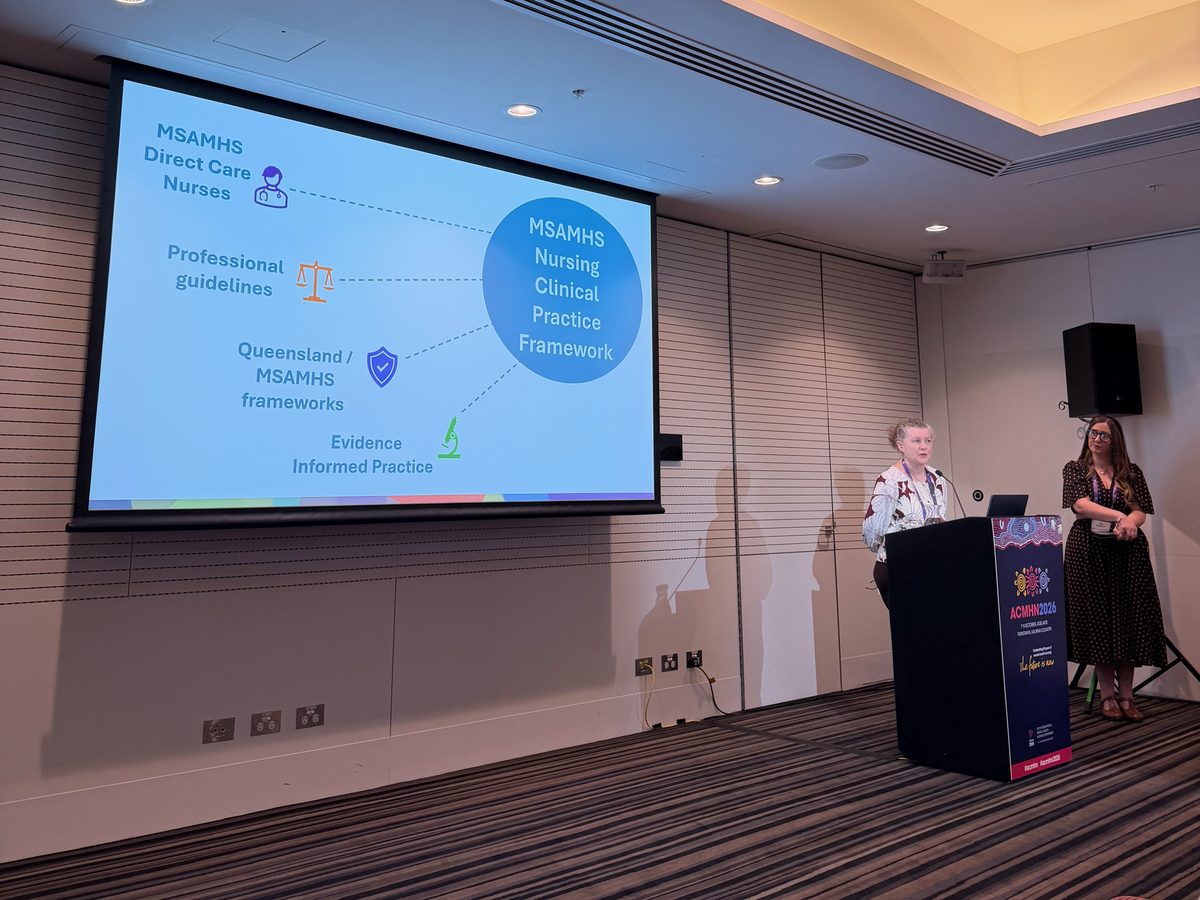
The Metro South team’s work on a clinical practice framework showed why making this explicit can be difficult. Nurses across different settings and grades were being asked to describe their specialist contribution and how their scope differed. The framework is still being developed, with further consultation ahead.
There is a practical reason to do this work. If the contribution is hard to describe, it is also harder for colleagues and managers to understand what needs supporting.
Rehearsing the conversation
Dr Claire Hayes’s presentation on mental health simulation gave that discussion a very practical direction.
Her review with colleagues, including researchers from Mae Fah Luang University in Thailand, found promising improvements in undergraduate students’ knowledge and performance. The studies varied substantially, and questions remain about how well learning is retained and transferred into clinical practice.
The teaching implications were useful: connect simulation to the curriculum, create an authentic interaction, and make time for feedback and debriefing. Trained simulated participants can help students practise without relying on each other’s assumptions about what mental distress looks like.
For educators, the question becomes quite concrete. What does the learner need to be able to say or do? Where will they rehearse it? Who will help them understand the response they get?
Dr Karen-Ann Clarke and Dr Christine Palmer described a related challenge at the University of the Sunshine Coast. Their redesigned curriculum deliberately gives mental health knowledge a place across the degree, building from self-awareness and communication towards more complex care.
The discussion also surfaced the work needed behind that design: helping other educators understand and teach the mental health content woven through their subjects. A place in the curriculum needs people who can bring it to life.
A later presentation mapping publicly available postgraduate course information added a useful reminder for students and employers: look beyond the qualification title. Compare the mental health content, clinical requirements and accreditation information, and ask the provider where the public description is unclear.
Giving implementation enough support
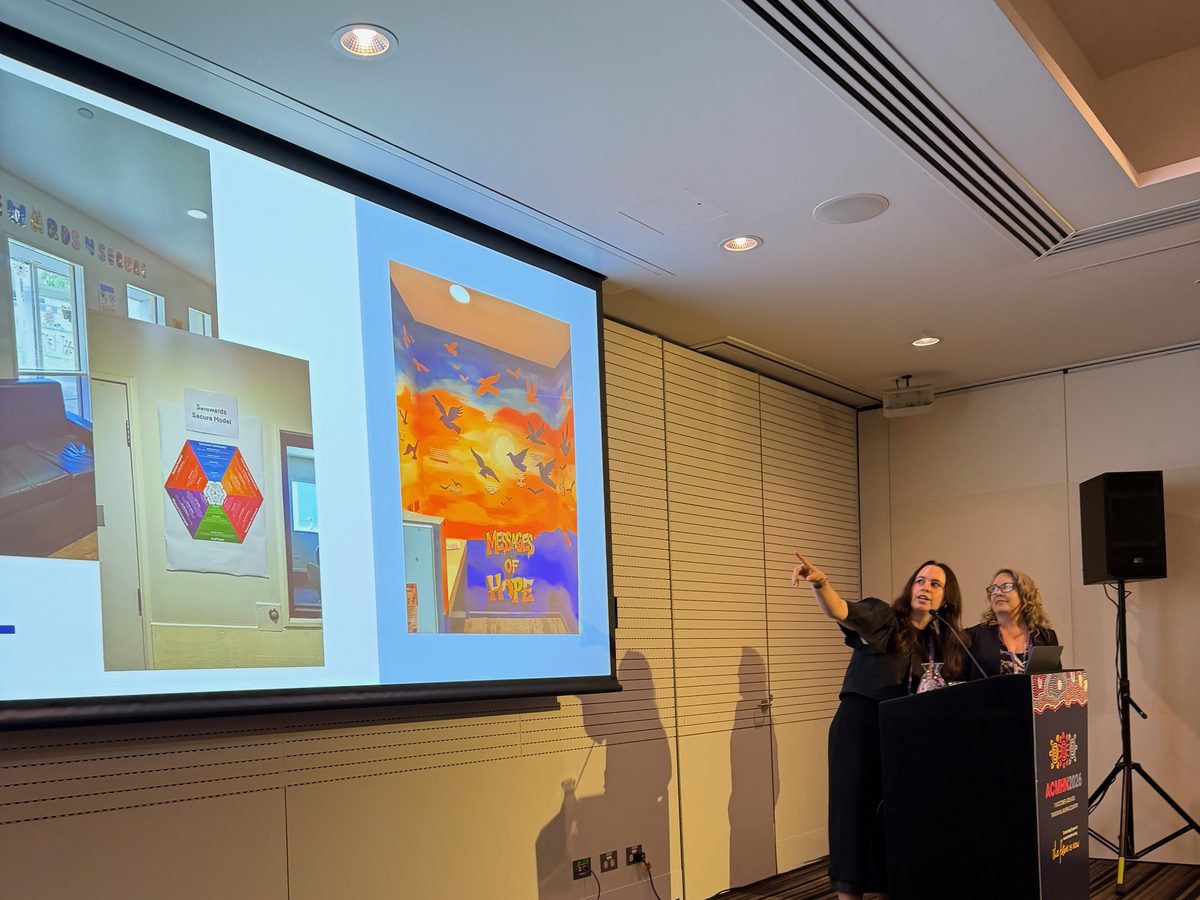
Tess Maguire and Laura Jeffery’s Safewards Secure presentation offered useful detail about implementation in a forensic setting.
They described building on the original Safewards model while responding to the particular features of secure care, including long stays and transitions between settings. The implementation included operational support to release the team for workshops, dedicated project support and staged introduction of interventions over twelve months.
Those are details worth taking back to a service. What time will the team have? Who will support the work between workshops? How will consumers and staff help shape its use in their setting?
The research analysis is continuing. The implementation account already gives services plenty to consider without getting ahead of the final findings.
A session on voluntary reflective practice groups reinforced the importance of support between learning activities. Participants described feeling accepted and able to speak without judgement. The presenter also acknowledged the organisational work needed to make the groups happen, and challenges in connecting participant-led discussions with Safewards.
The Mercy Mental Health team brought another everyday challenge into view. Staff could complete a sedation and agitation observation tool, but needed further support to translate scores into documented interventions and escalation.
That is a useful question for any new clinical tool: once the assessment is recorded, what happens next?
Including the person
A presentation on consumer-centred handover brought the focus back to the conversation itself.
Lisa raised a point that deserves attention: a handover can happen in front of a person without actually including them.
The education described in the session gave nurses opportunities to practise those conversations, receive feedback and consider the language they used. The presenters were clear that improvements in staff-reported confidence and capability do not, on their own, establish a change in clinical practice. Follow-up work is underway.
For teams reviewing handover, the immediate question is whether the person has a meaningful opportunity to contribute. That includes what they want the incoming nurse to know, whether they want to participate, and how privacy and distress are handled.
Taking something back
There was a lot to take in on day two, and these are a few of the threads from the sessions we attended.
Kylie Smith’s keynote also included a practical request: preserve nursing’s records. The work can disappear from the historical account when nobody keeps evidence of what nurses did and why it mattered.
There is a useful task here for the present too. Choose one part of practice that needs strengthening. Describe the judgement involved. Give people a chance to rehearse it, put support around it, and check what changes in everyday care.
That gives us something useful to take home from Adelaide, and something worth recording for future generations of nurses.
These are Xantha's own notes and reflections, not official ACMHN 2026 content. Speakers' findings are summarised in our words — for the detail, go to the presenters and the conference program.