
Xantha
For general & private hospitals

Care Under Pressure

De-escalation for any ward, any discipline — practised with a patient who feels real, reviewed through their eyes.

High-fidelity simulation for the moments that don't make the incident report but wear a team down: the anxious admission, the family at the desk, the patient who has been waiting four hours. Staff practise recognising distress early and communicating before, during and after escalation.

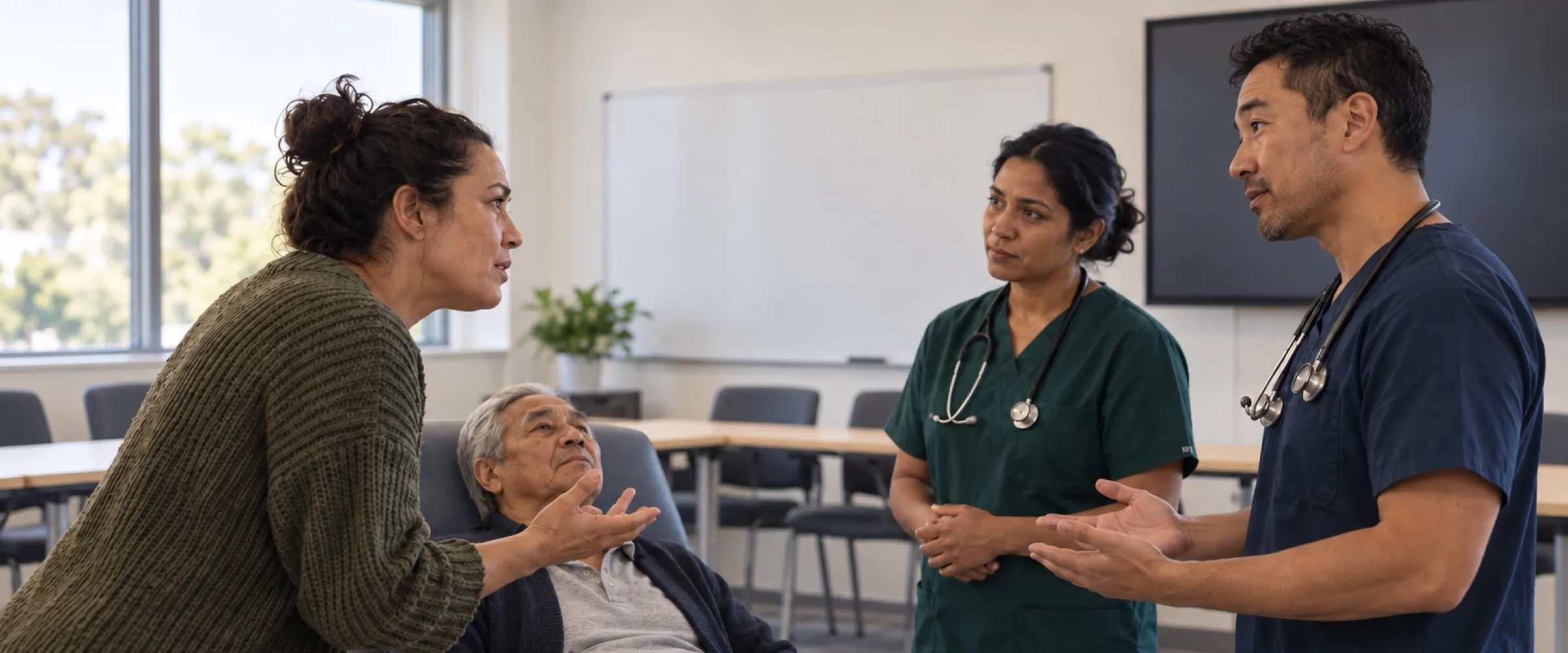
A frustrated family member leaning over a patient while a nurse and doctor stand calmly at the foot of the bed
Why it works

Occupational violence rarely starts with violence.

It starts with a patient who wasn't heard, a family member who wasn't told, a wait that wasn't explained. By the time security is called the moment has passed. Care Under Pressure trains the ten minutes before that — the recognition and the words — using the same actor-led method Xantha has used across mental health for a decade, adapted for wards where staff have no Safewards vocabulary and no time for one.

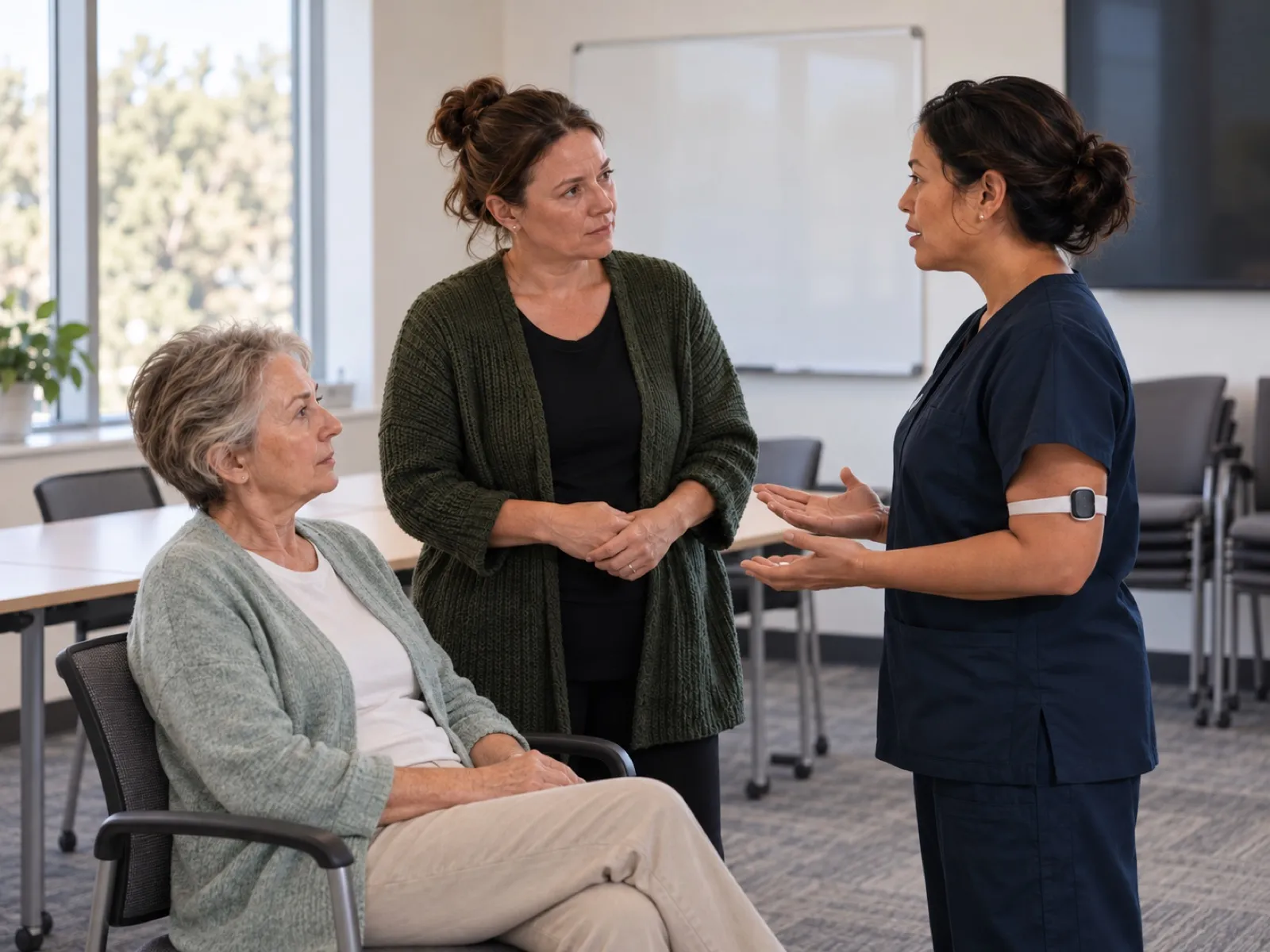
Two actors playing a patient and her daughter with a clinician wearing a biometric armband
For WHS and OVA managers
A program you can point to.

Work-related violence claims are rising in every state. Care Under Pressure gives you a documented, practical intervention for your WorkSafe review, an attendance record for every participant and, with the custom format, measures tied to your own incident data.

Formats

Start with one patient. Add the family when the team is ready.

01

Single Patient Simulation

One day · any ward

A newly admitted patient, played by a professional actor, moves through the day the way patients do: uncertain, in pain, waiting. Staff practise recognising distress early, communicating clearly and de-escalating before it becomes an incident — then watch it back through the patient's eyes and go again.
02

Patient & Family Simulation

One day · advanced

The same patient, plus the family member at the bedside who is frightened, angry or both. Staff learn to hold the room: manage two escalations at once, keep the team aligned and communicate before, during and after the moment.

03

Custom simulation

Scoped with you

Built around your incident data: a specific ward, presentation or time of day. We co-design the scenarios and the measures with your educators and safety leads.

Smart glasses and biometrics

See what the patient saw. Feel what you didn't notice.

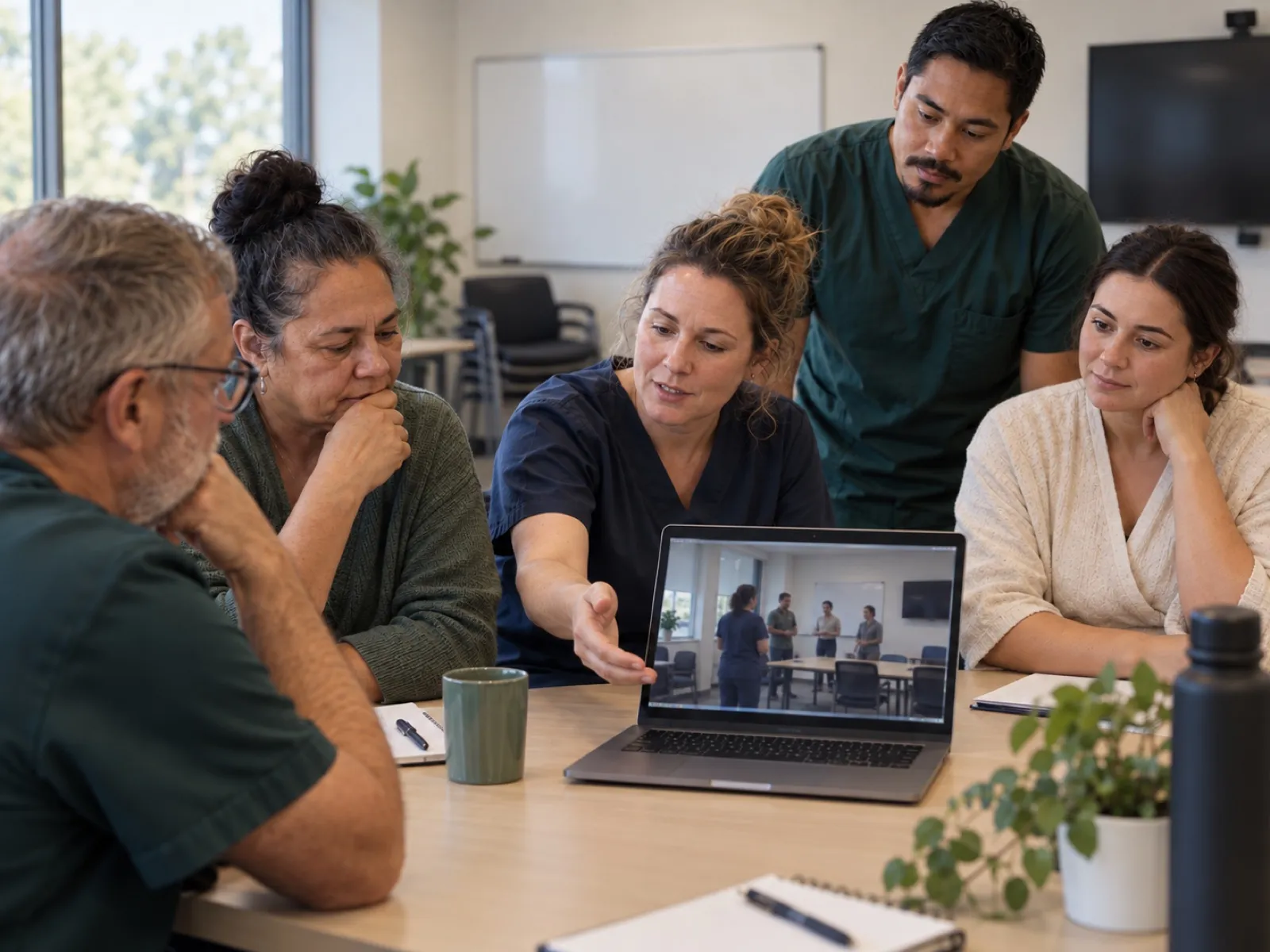
The simulated patient wears smart glasses, so each participant reviews their own approach — tone, distance, hands, words — exactly as the patient experienced it. Participants can also wear a biometric armband, so the debrief can show the heart-rate spike that came before the sharp reply. Both are optional; both make feedback specific instead of general.

A debrief group watching a smart-glasses recording on a laptop

One day. One ward. Measurable change in how staff respond.

Care Under Pressure is scoped and quoted for your service; most wards start with a single simulation day.