What Safewards Is & Safewards in Australia
Lesson Overview
Safewards is an evidence-based model designed to reduce conflict and restrictive practices by improving the everyday moments that shape a person’s experience of care.
This lesson explains where Safewards came from, why it works, and how it has been successfully implemented in Australia.
Key Insights
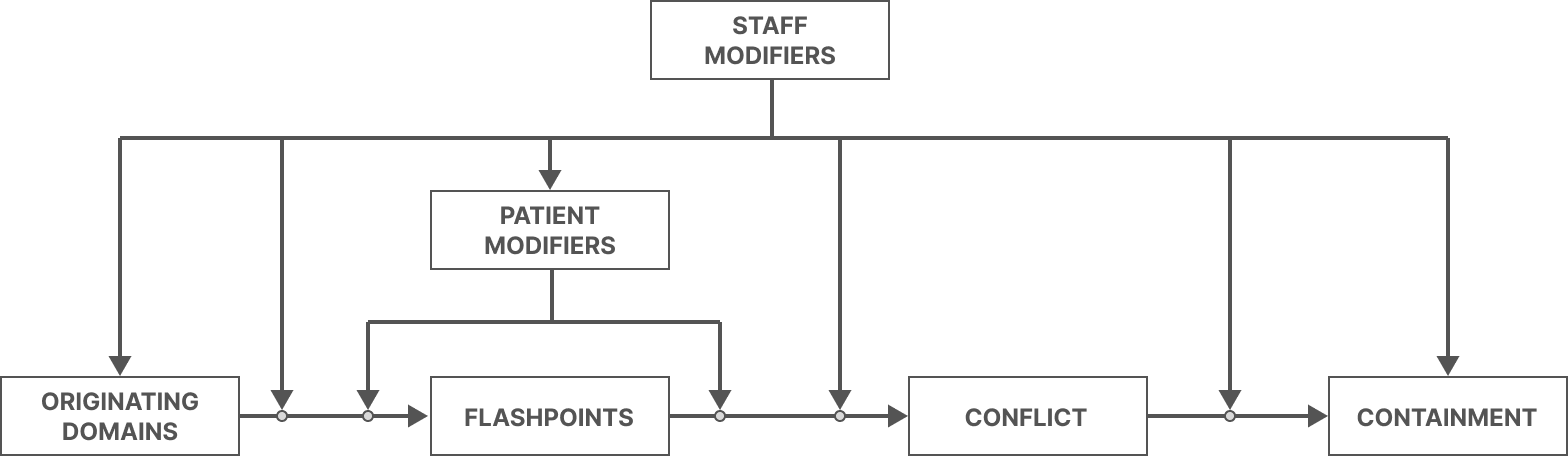
Safewards was originally developed in the United Kingdom through research into why conflict and restrictive interventions occur in healthcare environments.
Researchers found incidents were rarely random. They were often influenced by:
communication breakdown
environmental stress
uncertainty
inconsistent responses
unmet needs
fear
relationship strain
systems pressure
Safewards turns these insights into practical tools that frontline teams can use every shift.
At its heart, Safewards is about creating safer, more therapeutic environments through stronger relationships, earlier support and more consistent practice.
It asks healthcare teams to move from reacting to behaviour toward understanding what sits underneath it.
Safewards in Australia
Safewards has been adopted and adapted across Australia in a wide range of healthcare settings.
Its success has often depended on several key factors:
Leadership Support
Visible leaders who champion the model and support teams through change.
Staff Ownership
Teams being invited into the process rather than having it imposed on them.
Local Adaptation
Adjusting the model to suit different environments such as mental health units, emergency departments and general hospital wards.
Communities of Practice
Services learning from one another, sharing what works, discussing challenges and improving over time.
Persistence
Safewards works best when it is sustained - not launched once and forgotten.
In Australia, many clinicians who were initially sceptical became supporters once they saw the impact on safety, relationships and patient experience.
Why This Matters
Many workplaces already do elements of Safewards naturally.
The value of the model is that it gives teams:
shared language
practical structure
evidence-informed strategies
greater consistency
a clear philosophy of care
Safewards is not about extra work.
It is about doing everyday work more intentionally.
Key Takeaways
Safewards is evidence-based and practical
Conflict is often influenced by systems and interactions
Australian success has relied on leadership and adaptation
Safewards works best as a way of working, not a project
Reflection
Would your workplace treat Safewards as:
another project?
extra work?
or a better way of working?
Why?